Dr. Esto Mader
Diversity and Gender Equality
Center for Transdisciplinary Gender Studies
Humboldt University of Berlin
My research areas are sociology and gender studies with a focus on gender relations, queer theory and diversity. The analysis of inequalities and discrimination in everyday life, on the labor market, in organizations and in science and medicine is central to my research. This research approach combines critical perspectives on normativity and everyday experiences with the analyses of social structures and processes.
Books
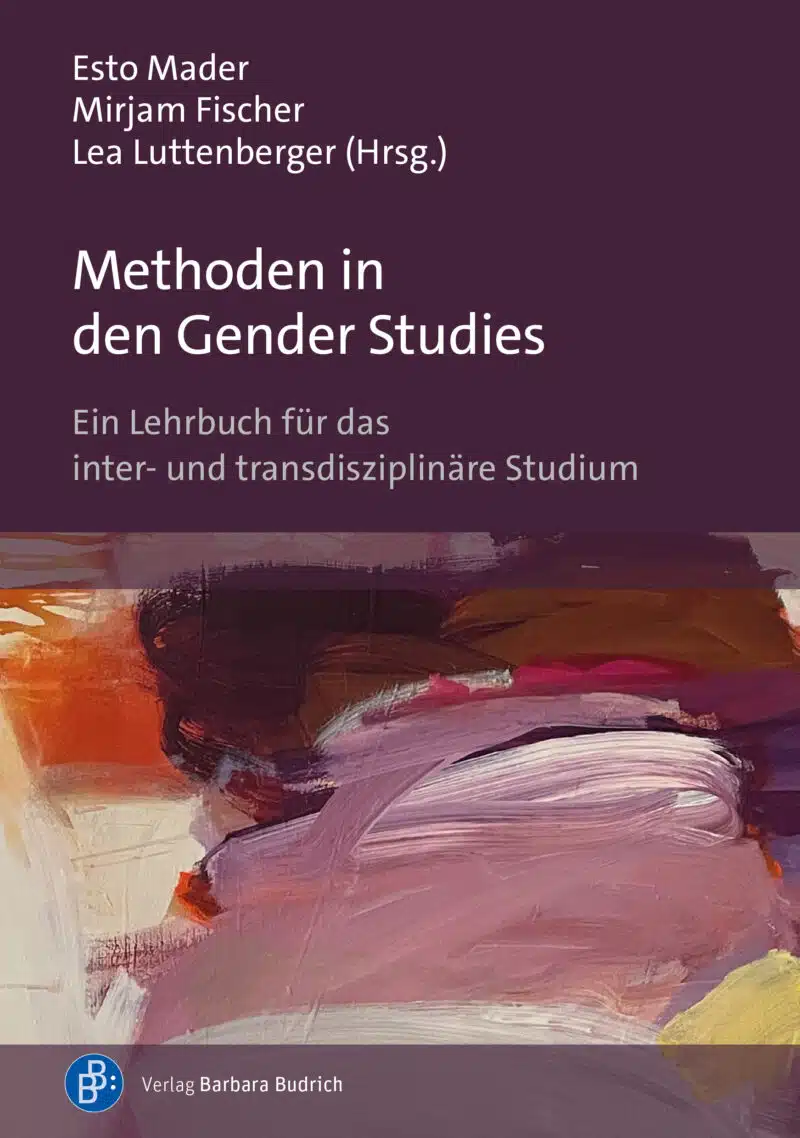
Gender studies are characterized not only by their analyses of power and dominance structures, social inequalities, and normative frameworks, but also explicitly see themselves as a self-reflective academic discipline. This requires adopting diverse academic approaches, perspectives, and standpoints. Inter- and transdisciplinarity is an important characteristic of gender studies: on the one hand, its critical perspective extends beyond disciplinary boundaries, and on the other hand, this critique connects various disciplinary fields of research. Due to inter- and transdisciplinarity, it is difficult to speak of “methods of gender studies” in the singular. Rather, gender studies encompasses a diverse array of methods and methodologies from various disciplines and schools of thought. We view this methodological diversity as a strength of gender studies. The consensus underlying this diversity is that the research question guides the choice of methods. For students, this diversity of approaches can be difficult to grasp, especially in the early stages of a Gender Studies program. This textbook supports Gender Studies students in finding their bearings and offers an introduction to the practical implementation of research projects. The individual chapters focus on the specifics of disciplinary and epistemological approaches, the development of a research question, and an exemplary implementation.

Subjects who are commonly marginalised feel strong in queer spaces. By means of an imagined basic consensus and an own affective-aesthetic logic, a sense of home is created: “being different” is indulged, networks are built and people celebrate each other. Yet, even such spaces are structured by hierarchies, internal norms and exclusions of the scene, leading to constant negotiations which not only significantly impact the production of queer spaces, but also the abilities for action that may emerge from within them. Esto Mader uses diffractive methods to highlight the dynamics of queer spaces. This study concludes that fluidity is intrinsic to such spaces.
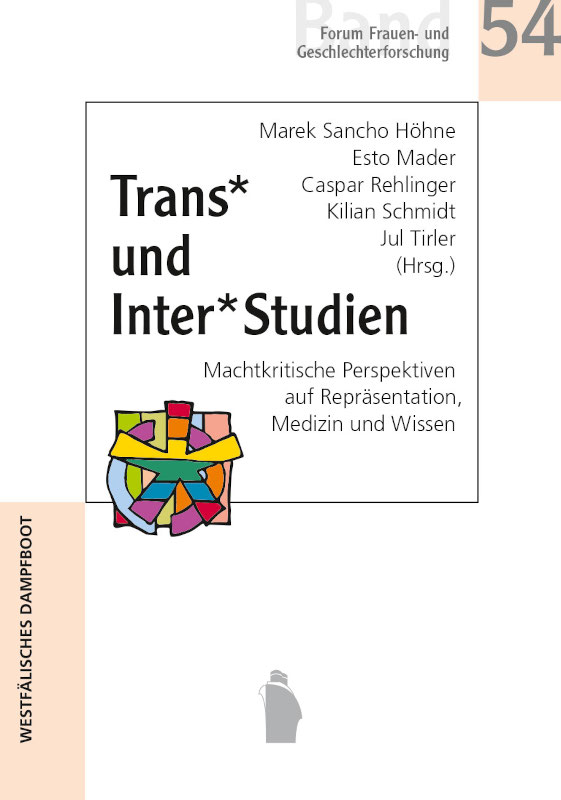
The articles in this volume explore positions, perspectives, practices, and bodies beyond cis-endo-binary gender. They aim in particular to account for the intersection of gender with other dimensions of power. Building on previous ITW anthologies on current research in Trans* and Inter* Studies in the German-speaking world, this volume focuses on contributions that adopt a critical perspective on normativity, as well as those that systematically address the intersections of power and dominance relations in the field of Trans* and Inter* Studies. The contributors come from various humanities and social science contexts and disciplines, such as gender studies, education, sociology, theology, ethnology, cultural and social anthropology, and cultural studies, as well as from counseling practice. The articles are organized into the sections “Community Knowledge and Practices,” “Critique of Medicine,” and “Representation.”
03
Trans* und Inter* Studien - Machtkritische Perspektiven auf Repräsentation, Medizin und Wissen
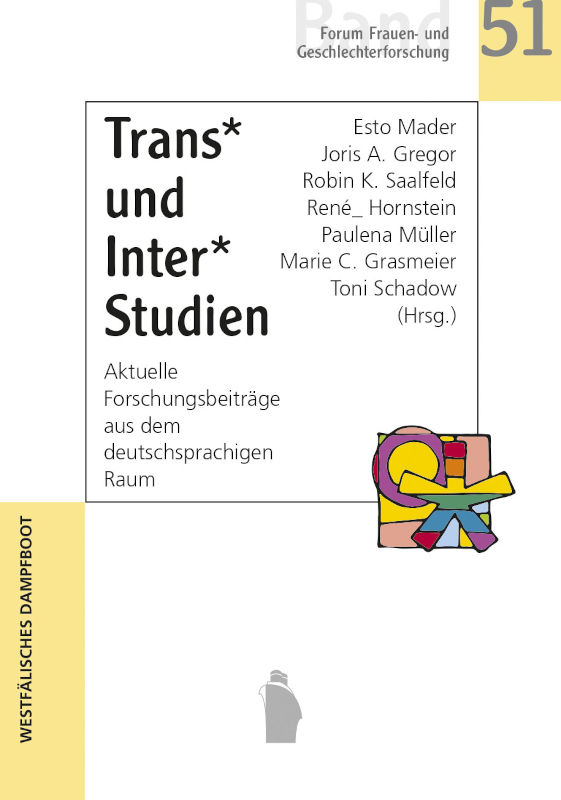
This volume makes a contribution to the relatively young German-speaking field of trans* and intersex* studies. The texts approach trans* and inter* from different disciplines and with a decidedly critical perspective on psychiatry, medicine and normativity. Their common ground lies in a productive critique of scientific and social discourses surrounding these phenomena and in questioning the relationship between society and the marginalized. The volume thereby updates the discourse on situated research initiated by the methodological postulates of Maria Mies in 1978 so highly significant for feminist research. It accordingly also regards itself as a contribution to the solidary connection between feminist research and queer theory. The Forum for Women’s and Gender Studies thus opens up a space within (queer) feminist discourse to focus attention on trans* and inter* voices.
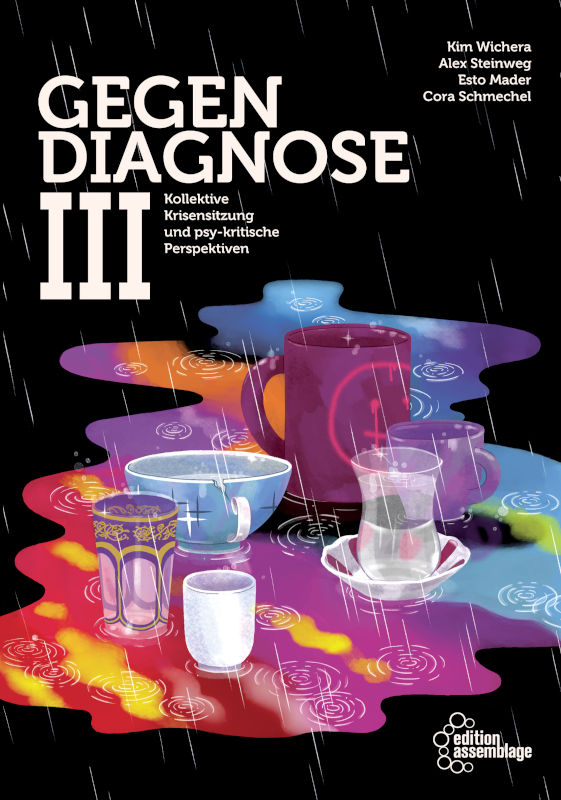
The past few years have been marked by the global experience of the COVID-crisis. This volume therefore investigates experiences of crisis and collective practices in dealing with them. The contributions criticize psychiatric and psychological structures and institutions. The variety of studies is among other reflected in the formats of the contributions as Gegendiagnose III includes poems, song lyrics, and visual contributions.
Gegendiagnose III focuses on processes of pathologization and their consequences. Psychiatric and psychological structures and institutions are critically examined. The third volume distinguishes itself by offering reflections on the potentials and risks of collective practices and self-help.

The second volume focuses on the moments in which “we” pathologize and govern ourselves, and which role concepts such as mental health, illness, normality and personal responsibility play in this regard. Our ‘second counter-diagnosis’ is characterized by a an explicit and reflected diversity within our perspectives, as well as by a variety in the formats of the contributions: They range from abstract academic theory and analysis over autoethnographic approaches to very personal testimonies as well as to prose and include perspectives the people affected and their relatives just as much as perspectives of ‘professionals’. This juxtaposition of perspectives is to be understood as a critique of the prevailing power of definition of the psy-disciplines and their institutions. The contributions analyze mechanisms and effects of the neoliberal psychiatric-psychological health system and inquire possibilities of resistance on different levels.
Research areas
Gender relations and diversity in the labor market and in organizations
Gender in STEM
Queer, trans* and inter* studies
Anti-discrimination and intersectionality
Gender and diversity in the field of health/mental health
Critique of science and objectivity